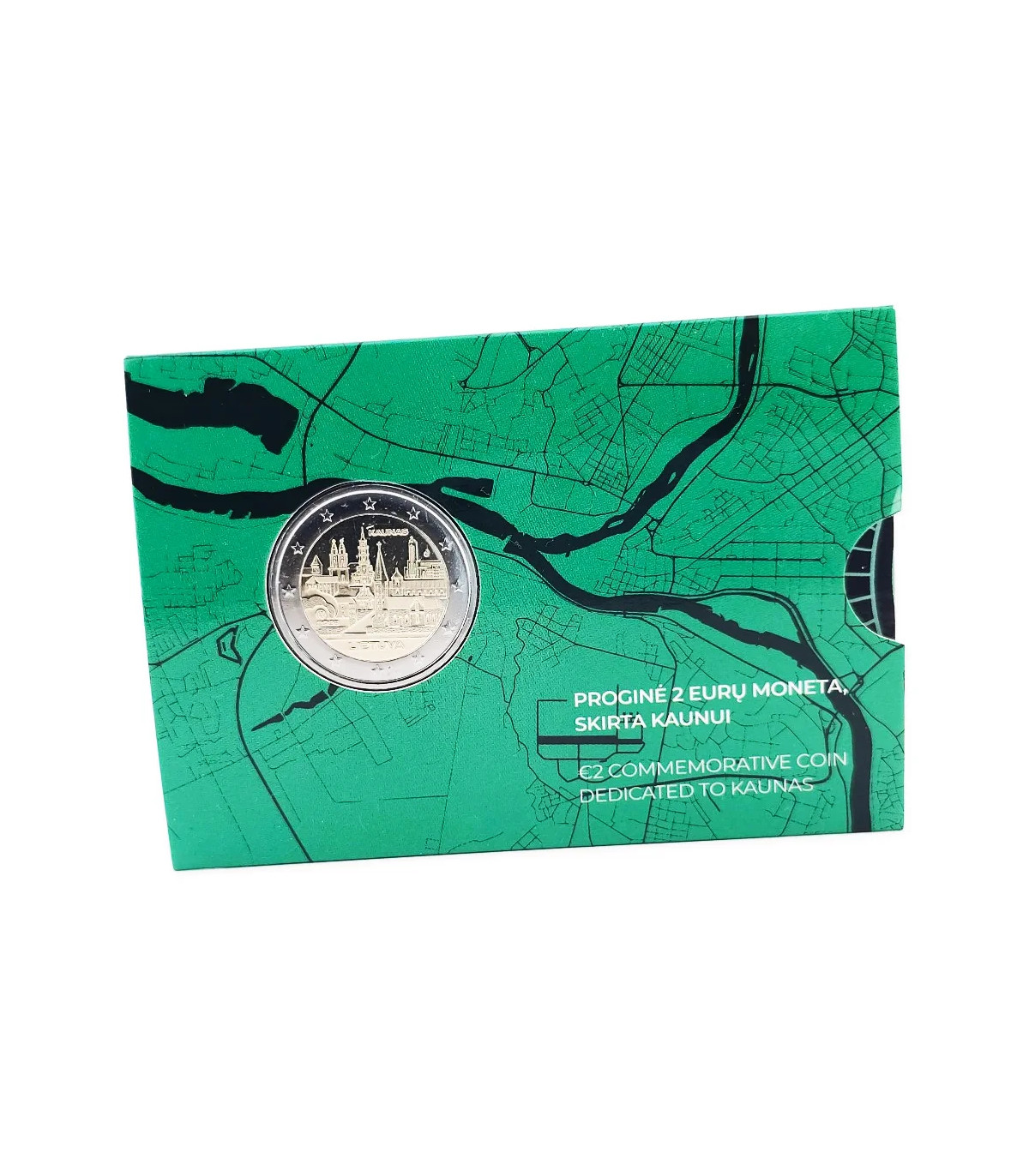
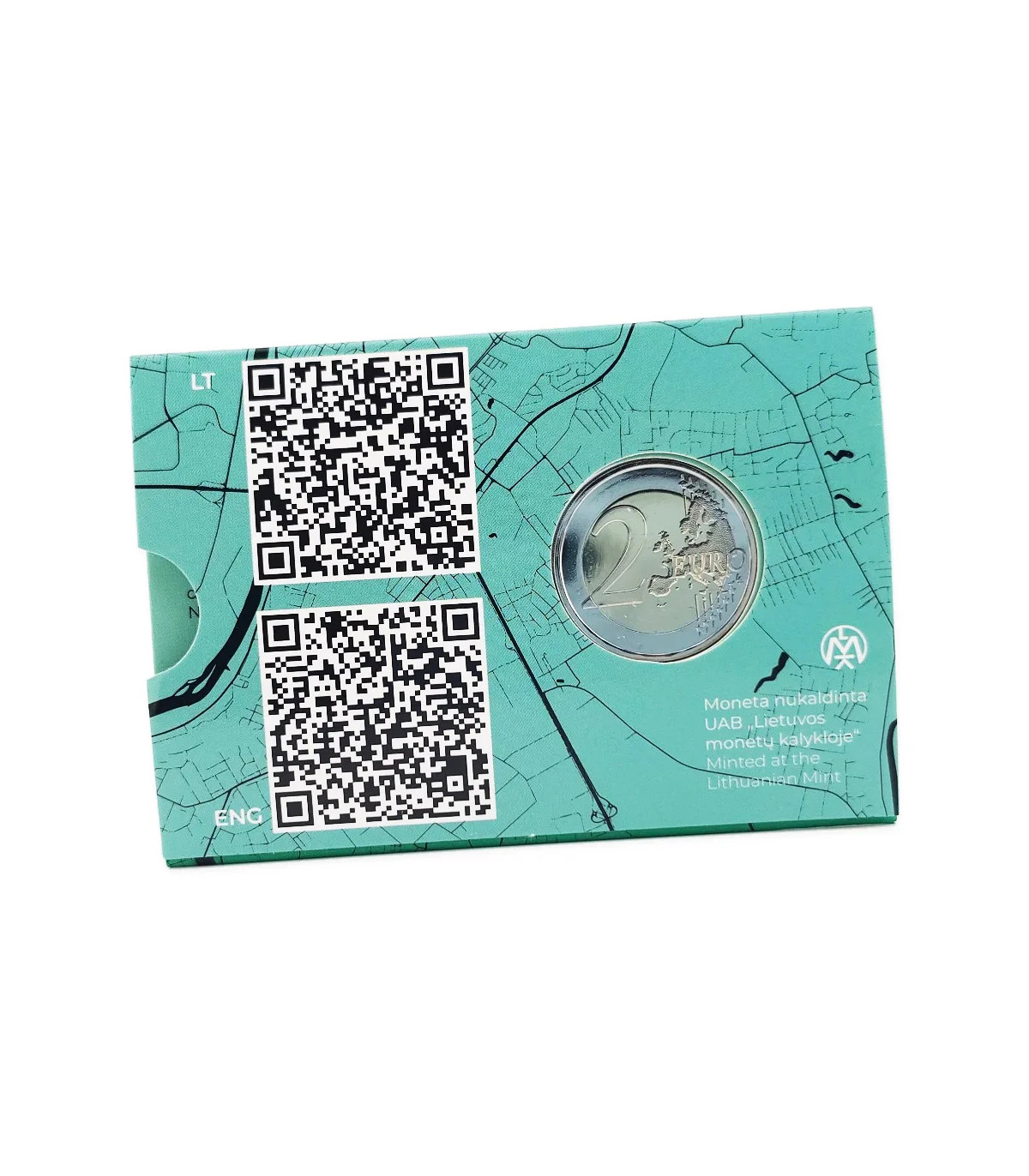
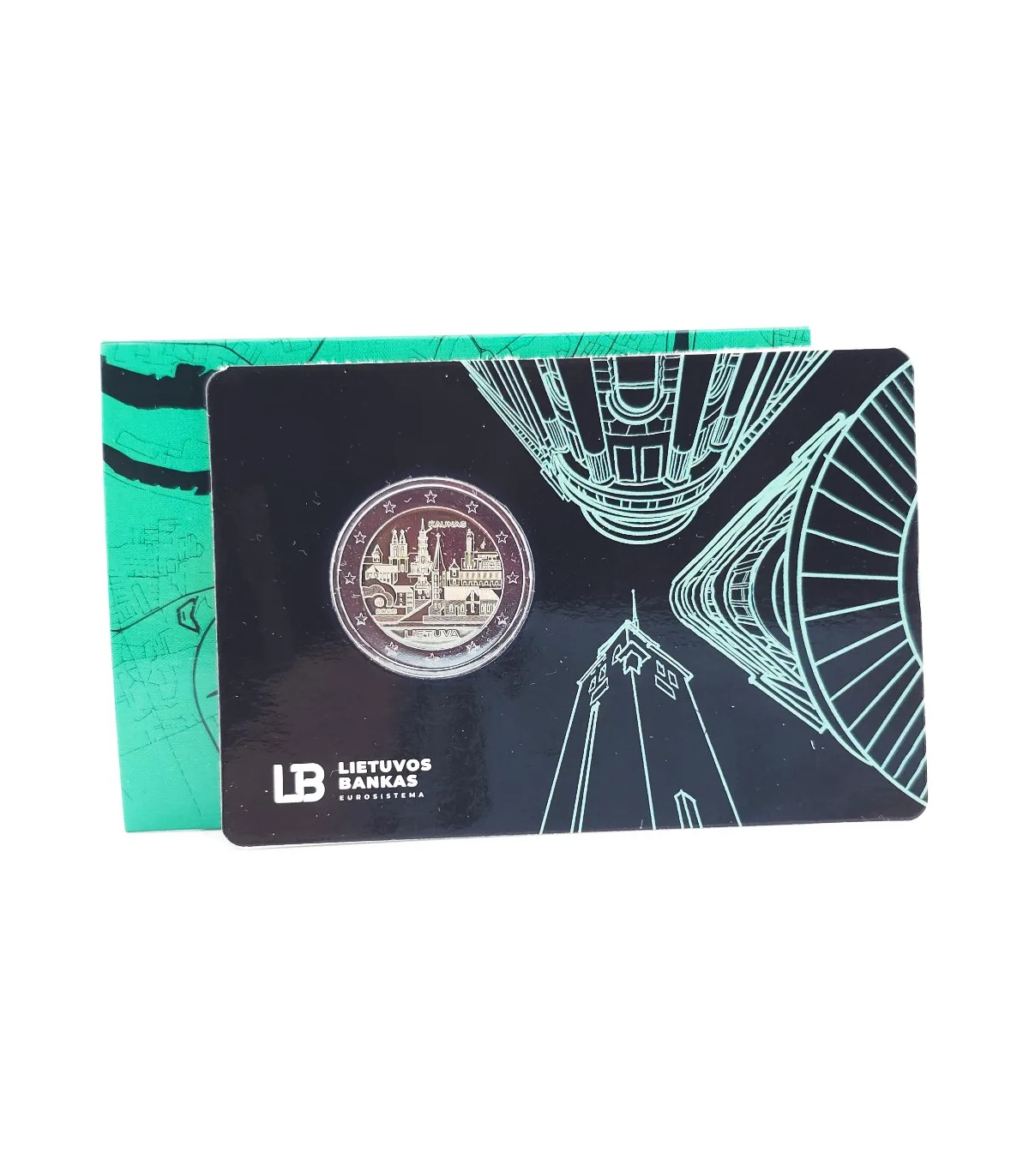
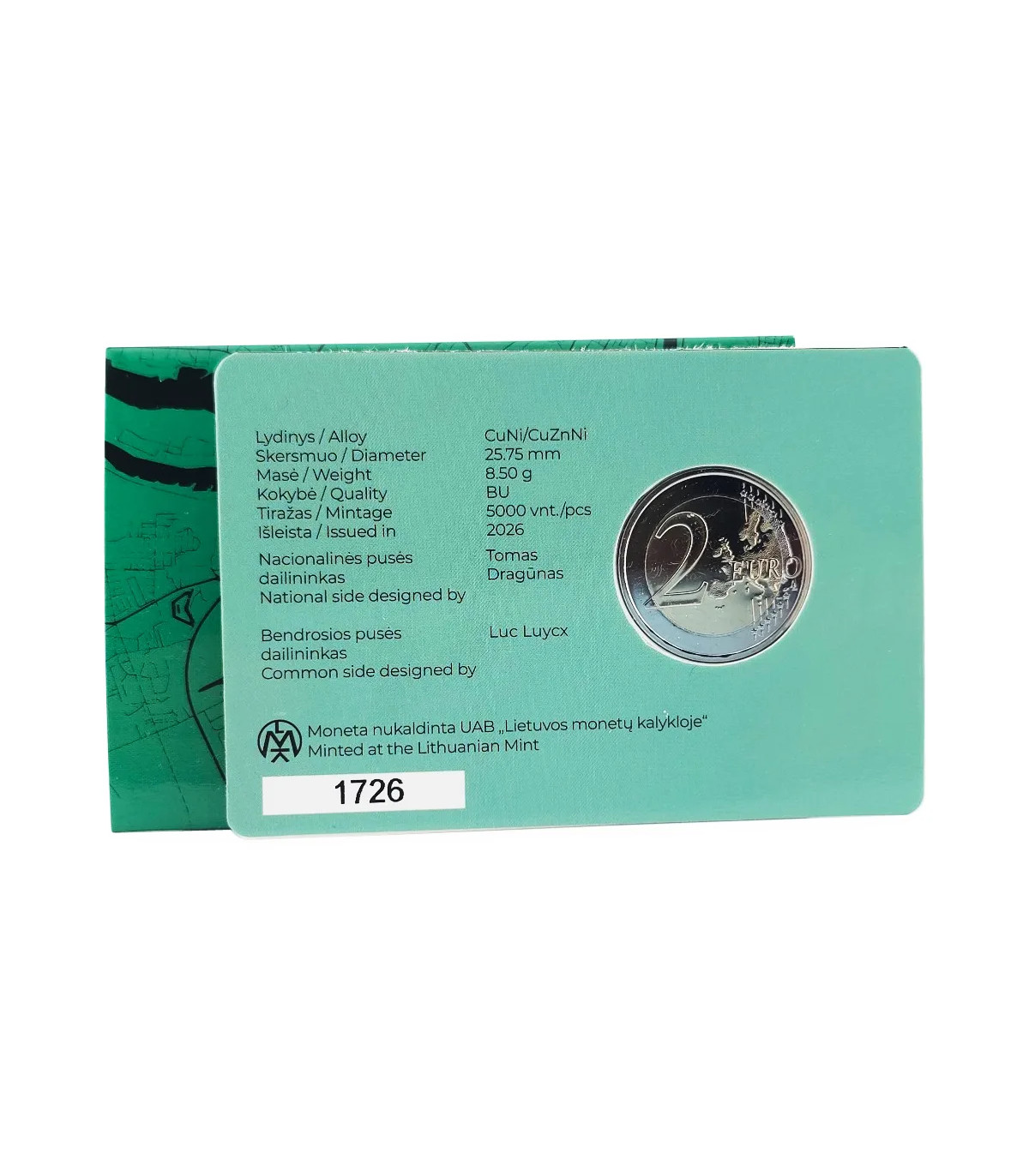
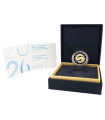
The 2026 Lithuania 2-euro Kaunas UNC coin highlights the historic monuments and modernist architecture of the country’s former provisional capital. Issued in a mintage of 495,000 in UNC quality, it is a valuable addition to any collection of Baltic coins or coins dedicated to European heritage.
Women's clothing size
| Size | XS | S | M | L |
|---|---|---|---|---|
| Euro | 32/34 | 36 | 38 | 40 |
| USA | 0/2 | 4 | 6 | 8 |
| Bust(in) | 31-32 | 33 | 34 | 36 |
| Bust(cm) | 80.5-82.5 | 84.5 | 87 | 92 |
| Waist(in) | 24-25 | 26 | 27 | 29 |
| Waist(cm) | 62.5-64.5 | 66.5 | 69 | 74 |
| Hips(in) | 34-35 | 36 | 37 | 39 |
| Hips(cm) | 87.5-89.5 | 91.5 | 94 | 99 |
With your arms relaxed at your sides, measure around the fullest part of your chest.
Measure around the narrowest part of your natural waist, generally around the belly button. To ensure a comfortable fit, keep one finger between the measuring tape and your body.
Security policy
(edit with the Customer Reassurance module)
Delivery policy
(edit with the Customer Reassurance module)
Return policy
(edit with the Customer Reassurance module)
CUSTOMER SERVICE
06.40.90.50.63 / contact@lecomptoirdeleuro.fr
Lithuania 2026 2-Euro Coincard - City of Kaunas
Description:
The 2026 Lithuania 2-Euro Kaunas coin pays tribute to a city that is emblematic of Lithuanian history and architectural heritage. Its design brings together historic monuments and modernist buildings in a panorama that chronicles several centuries of urban development. Offered in UNC (Uncirculated) quality, this coin complements a collection of commemorative 2-euro coins dedicated to the Baltic states or European heritage.
Kaunas, Former Capital and Symbol of Lithuanian Revival
Located at the confluence of the Nemunas and Neris rivers, Kaunas served as the provisional capital of Lithuania from 1919 to 1939. During this period, it underwent a significant transformation: public buildings, cultural institutions, and residential neighborhoods emerged to support the ambitions of the young independent state.
This period of vibrant activity gave rise to a distinctive modernist architecture, in which new urban designs blended seamlessly with the landscape and the existing city. The buildings from the interwar period thus express a desire for modernization and confidence in the future.
Recognized by UNESCO in 2023, the site “Kaunas, a Modernist City: Architecture of Optimism, 1919–1939” highlights this heritage. The exhibition invites visitors to discover this history through the monuments that shape the city’s identity.
A panorama spanning historic heritage and modern architecture
Designed by Tomas Dragūnas, the national side features several buildings characteristic of Kaunas. The Church of Vytautas the Great appears in the foreground, accompanied notably by St. Peter and Paul Cathedral, the Perkūnas House, and City Hall. The castle completes this architectural landscape.
On the right, the Kaunas Central Post Office and the Basilica of the Resurrection of Christ illustrate the modernism of the former capital. Plant motifs on the left bring balance to the composition.
The inscriptions “KAUNAS,” “LIETUVA,” and “2026” identify the city, the issuing country, and the year of issue. The twelve European stars surround the design.
A coin to explore the heritage of the Baltic states
With its detailed panorama, this commemorative 2-euro coin from Lithuania combines historical interest with architectural discovery. It fits perfectly into a 2026 annual collection, a collection dedicated to Lithuanian coins, or a thematic set focused on European cities.
Mintage: ,500 copies